

Few Shark Tank pitches carry as much emotional weight as Johnny Georges walking into the tank with a simple plastic cone and a story about honouring his father’s legacy. Today, the tree teepee net worth is estimated at around $100 million, a figure that has turned a modest citrus-farm invention into one of the show’s most celebrated long-term success stories. This article walks through exactly how that growth happened, what the brand looks like heading into 2026, and why the tree teepee net worth continues to climb year after year.
What makes this story stand out isn’t just the dollar figure itself, but the path it took to get there. A single farmer with a practical problem, limited funding, and no business background managed to build a company that resonates with both agricultural professionals and everyday viewers. That combination of purpose and persistence is central to understanding why the tree teepee net worth has become such a widely discussed topic among Shark Tank fans and business enthusiasts alike.
What Is Tree T-Pee
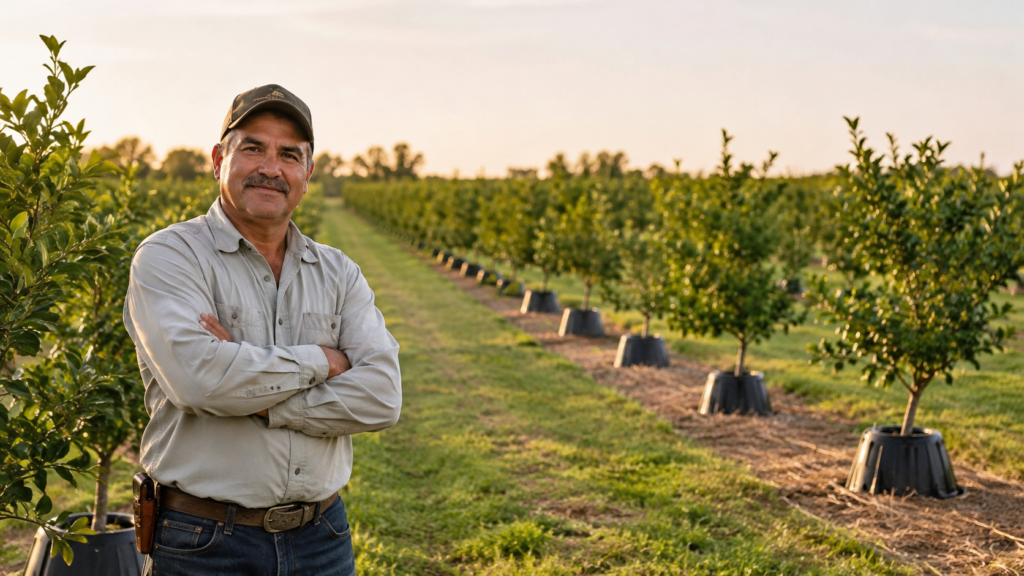
Tree T-Pee is a cone-shaped, low-cost irrigation cover designed to wrap around the base of young trees. It channels water and fertilizer directly to the root zone rather than letting them evaporate, run off, or spread across unnecessary soil. This simple engineering choice is one of the core reasons the product gained traction so quickly and why the tree teepee net worth has grown so significantly since its television debut over a decade ago.
The device was originally built with citrus and orchard farmers in mind, but it has since expanded to include broader agricultural and even residential landscaping uses. By trapping moisture close to the roots, it can reduce water usage per tree from tens of thousands of gallons annually down to under a thousand, a statistic that immediately caught the attention of both investors and the general public when it was first introduced.
The Origin Story Behind Tree T-Pee
Johnny Georges spent decades working in irrigation and citrus farming long before he ever considered pitching a product on national television. Frustrated by repeated frost damage and the rising cost of water for his own trees, he engineered a low-cost cone that solved both problems simultaneously, laying the groundwork for what would eventually become the tree teepee net worth story that so many people now recognize.
Georges built his earliest units by hand and sold them locally to farmers who understood the invention’s practical value right away. He priced the product modestly at first, prioritizing accessibility for working farmers over maximising his profit margin. That mission-first mindset became the emotional backbone of his eventual Shark Tank pitch and remains a defining characteristic of the brand’s identity today.
Tree T-Pee on Shark Tank
Georges appeared on Season 5 of Shark Tank, seeking $150,000 in exchange for a 20 per cent stake in his company. Several sharks, including Kevin O’Leary, ultimately passed on the deal, citing concerns about thin profit margins and the difficulty of scaling an agricultural product priced so affordably for farmers.
Guest shark John Paul DeJoria, co-founder of Patrón Tequila and John Paul Mitchell Systems, saw something the other investors overlooked. Moved by George’s commitment to helping farmers rather than maximising personal profit, DeJoria agreed to the full $150,000 for 20 per cent equity without negotiating the terms, a moment widely regarded as one of the most heartfelt exchanges in the show’s history and a turning point for the eventual tree teepee net worth.
Tree Teepee Net Worth Breakdown
At the time of the Shark Tank pitch in 2013, Tree T-Pee was a small operation valued at roughly $750,000. That figure reflected a young company with limited distribution and a product still largely unknown outside local farming communities in central Florida, where Georges had spent years building relationships with fellow growers.
Fast forward to 2026, and the tree teepee net worth is widely estimated at approximately $100 million. That dramatic increase reflects more than a decade of steady growth, including wider retail distribution, international expansion, and a loyal customer base built largely on word-of-mouth recommendations. It is worth noting that this figure is a market estimate reported across multiple outlets, not an officially audited valuation, so it should be treated as an informed approximation rather than a confirmed financial statement.
What’s Driving the Growth
A major factor behind the rising tree teepee net worth is the company’s retail expansion, including a partnership with Home Depot that put the product in front of a much broader consumer base than local farming communities alone could. The brand also grew internationally, reaching farmers and hobby growers across Europe, Australia, and parts of the Middle East over the following years.
Pricing strategy played an important role as well. The per-unit price rose gradually from around $4.50 to roughly $9.95, a modest increase that helped fund scaling operations without pricing out the working farmers the product was originally designed to serve. By 2021, the company had already reported around $5 million in annual revenue, a number that has almost certainly grown alongside the current tree teepee net worth estimate.
Is Tree T-Pee Still Operating
Yes, available reports indicate the company remains active and continues to sell through its official website, select retail partners, and international distributors. Georges still appears to be closely involved in day-to-day operations, and the mentorship relationship he built with DeJoria has been credited with helping guide the company’s long-term growth strategy well beyond the initial television appearance.
The product itself has evolved slightly since 2013, now offered in multiple colours and customizable with farm branding for larger agricultural operations. Its core function, protecting young trees while conserving water, remains unchanged. That consistency has helped the brand maintain credibility with its original farming audience while steadily attracting new customers across different markets and applications.
How It Compares to Other Shark Tank Stories
Tree T-Pee’s growth places it among a smaller group of Shark Tank alumni that built genuinely large, sustainable businesses after their pitch rather than experiencing a short-lived sales bump followed by decline. Its trajectory resembles that of other breakout hits from the show, in which a niche, purpose-driven product found a far larger market than the sharks initially expected during the original pitch.
What sets Tree T-Pee apart is the emotional framing behind its pitch and continued branding. Unlike products sold primarily on convenience or novelty, Tree T-Pee was built around one farmer helping other farmers solve a real problem. That mission-driven story has remained central to the company’s marketing and identity ever since its Shark Tank appearance made it a household name.
Read More: https://crackmagazines.com/thomas-earle-net-worth/
FAQs
What is Tree T-Pee’s net worth in 2026?
Tree T-Pee has an estimated net worth of $100 million as of 2026, according to multiple industry sources that track the brand’s growth since its original Shark Tank appearance more than a decade ago.
Who owns Tree T-Pee?
Tree T-Pee was invented by Johnny Georges, a former Florida citrus farmer who created the product to reduce irrigation costs and prevent frost damage to his own trees before turning it into a business.
How much was Tree T-Pee worth when it appeared on Shark Tank?
At the time of its 2013 Shark Tank pitch, Tree T-Pee was valued at roughly $750,000, a small fraction of the company’s current estimated worth.
Which Shark invested in Tree T-Pee?
Guest shark John Paul DeJoria invested $150,000 for a 20 per cent equity stake in the company, accepting George’s original terms without negotiating a counteroffer during the pitch.
Is Tree T-Pee still in business today?
Yes, the company continues to operate, selling through its official website, select retailers such as Home Depot, and international distributors across several continents.
How does Tree T-Pee generate revenue?
The company sells its patented water-conservation cones directly to farmers and agricultural businesses, keeping unit prices relatively low to remain accessible to working growers.
Is the $100 million net worth figure officially confirmed?
No, the figure is widely reported across multiple outlets as an estimate rather than an audited or officially disclosed valuation, so it should be treated as an informed approximation.
Conclusion
The tree teepee net worth story is a reminder that a simple, purpose-built invention can dramatically outgrow its humble origins. From a $750,000 valuation and a hand-built prototype in 2013 to an estimated $100 million brand in 2026, Johnny Georges’ journey shows how a strong mission, the right investor partnership, and consistent execution can compound significantly over more than a decade of steady work.
As water conservation becomes an increasingly urgent global concern, Tree T-Pee’s relevance in the agricultural market seems unlikely to fade anytime soon. The company’s continued expansion into new regions and retail channels suggests that the current tree teepee net worth estimate may not represent a ceiling, but rather another point along a still-rising trajectory for a business built on genuine purpose.